
Episode 373: 06-16-16
On this week’s show, Arden Karson of the Related Group talks the evolution of the Brickell residential market, Meg Daly joins to discuss The Underline project and its impact on Miami, Art Rendak shares his views on the commercial real estate lending market, and Jim gives us an update on Vivian.
Brickell Residential Market Update
Arden Karson, Senior Vice President at the Related Group, oversees the development of Brickell Heights, a 690-unit, two-tower condominium mixed-use project located in the Brickell Avenue submarket. She is also part of the Acquisitions group and is involved in sourcing and underwriting strategic real estate investments for the company.
We discuss the evolution of the Brickell residential market and the impact that Brickell Heights will have on the neighborhood.
Arden is also an Executive Member of the Board of Directors of the Friends of the Underline and serves as the Co-Chair of the Real Estate and Fundraising Committee. Friends of the Underline is working to transform the underutilized land and existing path under Miami’s MetroRail from Dadeland South to the Miami River at Brickell Station (10 miles) into a linear park and biking/pedestrian highway.
Friends of The Underline
Meg Daly is CEO and President of Friends of The Underline, a 501(c)3 non-profit organization leading the initiative to transform the underutilized land below Miami’s Metrorail into a 10-mile urban trail, linear park and living art destination (www.theunderline.org).
Meg joins Arden and Jim as they discuss the Underline project, its impact on Miami and how YOU can get involved!
Commercial Real Estate Lending Trends
Art Rendak is President at Inland Mortgage Capital Corporation/Inland Green Capital. Inland Mortgage Capital Corporation is looking to finance transitional or bridge lending opportunities in the commercial real estate space. Generally higher leverage with terms of three to five years. Inland has also entered the green energy finance business.
We discuss Art’s view of the commercial real estate lending marketplace and what Inland can do to help its clients “Go Green”.
Vivian Fried Kidney Transplant Update
An update on Vivian Fried’s kidney transplant. You can donate to her kidney transplant fund by clicking here: http://bit.ly/Donate2Vivian
To become a member of the Vivian Fried Fundraising Team click here: http://bit.ly/BeAVIVIANFundraiser
THANK YOU!
Episode 373: 06-16-16
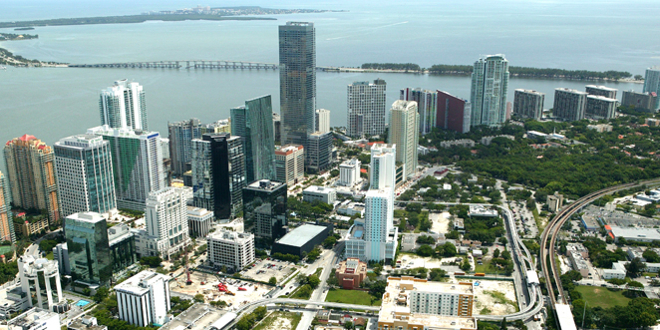
Featured image courtesy of UMCane at Wikimedia Commons.
Transcription:
Jim Fried: Wanda is getting fanatic back there which means we must be on the air. We’ve got an awesome show, we’ve got some of my favorite people in the studio, going to have a great time. We’re going to talk about the Brickell residential market, we’re going to give an update on what’s next. We’re going to do that with Arden Karson. She’s executive at the Related Group. We’re going to talk about what she’s doing up in Brickell Heights and the impact that’s going to have on the Brickell market. Then we’re going to get really cool. We’re going to talk about Miami’s new urbanism, Miami’s Underline. It’s the new thing that’s going to connect all the hot new neighborhoods in Miami. And we’ve got Arden’s good buddy Meg Daly. She’s the CEO and President of Friends of The Underline. And we’ve got Art Rendak. He is the President at Inland Mortgage Capital and Inland Green Capital. We’re going to talk about how going green can save money with Art. So we’ve got a great show. We’ll also give you an update on what’s going on with Vivian. But right now it’s time for me to toss it to Wanda. Then she’s going to go to commercial. Then we’re going to be back and we’re going to talk about Brickell. So stick with us. Wanda, it is yours.
[commercial break]
Jim Fried: We are back and we are talking with Arden Karson. Arden is the senior development person at the Related Group. Arden, what’s your real title there?
Arden Karson: Senior Vice President Development but I also work in acquisitions so when I’m not developing in Brickell or Wynwood or Palm Beach I’m actually looking for new transactions for Related.
Jim Fried: There you go. And you wear a hard hat when you do that, don’t you?
Arden Karson: Absolutely. I work for good chunk of today. I’m actually going up and down Brickell Heights on the buck hoist and checking out the amazing progress that we’re making on our project.
Jim Fried: That’s the jargon way to say the little elevator on the side that we all freak out that people actually ride. Is that what that is?
Arden Karson: I don’t even think about it. I just go in, but each time we elevate and we go up a floor, it’s just so exciting to look at the Miami skyline and what’s happening. It’s just so gorgeous and so exciting.
Jim Fried: I’m excited. I was at the Brickell City Center across the street from your deal looking at it, it’s just elevating and expanding, it’s really just amazing. Now, what I’ve noticed about the Related Group is they seem to be doing – I’ll call them – urban communities.
Arden Karson: Absolutely.
Jim Fried: Is that sort of Brickell Heights is going to be too? What are some of the things in Brickell Heights that are going to make it stand out from the rest of the buildings?
Arden Karson: We have a total of 690 residential units and with that we have about almost an acre and a half of open green space.
Jim Fried: How many of those units are still available for sale?
Arden Karson: Very few. We actually have about eight homes left to sell. They’re high floor, beautiful, three-bedroom, four-bedroom units that are left.
Jim Fried: Skypalace, #skypalace.
Arden Karson: Absolutely. Now is the time because with all the activity in Brickell, the opening of Brickell City Center, we see more and more people in our sales office every day. They’re feeling it, they know that the retail Brickell City Center is going to be open in the fall and the momentum is definitely there.
Jim Fried: Beyond momentum you’ve created a whole new neighborhood there with Brickell City Center in your project, basically creating the epicenter of the new Brickell Avenue.
Arden Karson: City within a city absolutely. And we’re walking distance right around the corner and you’d asked me about the amenities, what we’re offering, so let me go back a little bit and just tell you.
Arden Karson: Okay. So we have two pools on our nine-floor amenity deck, we have two club rooms, we have a conference center, we have a movie room, we have the kids playroom. We also have an Equinox gym 35,000 square foot Equinox gym.
Jim Fried: Wait a minute. A real gym affiliated with Equinox, not just a person that stands on Equinox on there?
Arden Karson: No, absolutely not. They’re actually an owner in the building and they have three floors.
Jim Fried: They bought a commercial condo?
Arden Karson: They did.
Jim Fried: So they’re there for the duration.
Arden Karson: State of the art. And if you see how crowded the Equinox facility is at the four seasons, there’s definitely demand with the growth of the population, daytime population, the full-time population. I’m a member of Equinox and I just see every day there’s more and more people so it’s going to be a great event to happen at the location right at the epicenter of Brickell.
Jim Fried: But it’s a completely different market now. They’re coming and somebody’s got to be working day and night to come up with how you parse Brickell Avenue. It’s got to be Edgewater, Midtown, there’s got to be something going on, the Arts District, so we know that they’ve been going to work up in the OmniAir. I really just called the OmniAir, they’re going to call pox on my house for doing that. With the whole thing, it all started with me going on lunch with Rose and Alice and realizing maybe there’s another side to Brickell Avenue. Now Rose and Alice is gone, it was a cash flowing land bank for years. Now Brickell Avenue is just cranky. I remember when we, I did marry Brickell Village so I remember that people couldn’t understand what are they going to need three publics for. I think they’re getting the picture, where’s the fourth publics going is what I want to know. I guess they call that fresh market. Or Whole Foods, my wife loves the Whole Foods.
Arden Karson: There’s actually going to be similar to in Eataly in Brickell City Center.
Jim Fried: Hold on a minute now. What is an Eataly?
Arden Karson: Eataly is located in 5th Avenue in New York and it’s Italian market and you can eat there, you can pick up items to take home, prepare food, it’s just a fabulous place for people to mingle and have a glass of wine but you also then can buy produce and proteins and take them home and cook.
Jim Fried: Yesterday when I called you and we T-ed up a little bit for the show I said ”Arden, what’s that crazy multicolor thing hanging from that deal on Brickell Avenue that you guys are doing south of Brickell Heights?”, you said that’s no crazy.. you go ahead and tell them what you told me.
Arden Karson: Actually that art piece you’re talking about-
Jim Fried: Art piece, that art piece.
Arden Karson: It is.
Jim Fried: I didn’t say it wasn’t. It caught my eye, didn’t it?
Arden Karson: The artist’s name is Linnenbrink and he’s a famous artist and he designed the facade for the SLS Brickell Hotel and condos which is actually on 13th in South Miami Avenue. But we also at Brickell Heights have a very famous artist who designed our mural and his name is Fabian Burgos. So that is vertical colored strips, ours is going to be more horizontal showing a lot of the movement on Brickell Avenue and all the velocity and excitement that’s going on there. So we’re actually going to be starting our mural probably within the next 30 or 60 days.
Jim Fried: So here I’m going to start evolving. Where is your project in relation to what could be considered to be done Underline? How close are you? Do you like to interact with that at all?
Arden Karson: We’re literally probably about 100 feet from the Underline.
Jim Fried: Am I looking dumb here now, Meg?
Meg Daly: No, not at all.
Jim Fried: Thank you. Stay there. I don’t want you to get encouraged too far because this is Arden’s time. So you’re 100 feet from there. To me it sounds like it’s an incredible benefit because now the active person living on Brickell Avenue has a green place that they can go run, bike or hike for miles.
Arden Karson: It’s not just about a green place and recreation, it’s about helping with transportation and congestion. That’s what everybody talks about. ”Brickell is going to be so crowded when all these residential units are completed and all these people move in”. But by having alternate forms of transportation such as the metro rail which is so convenient, you can bike there, you can park your car nearby, you can get on the metro rail, you can get on the metro mover. It’s all just very synergistic.
Jim Fried: And is this appealing to people that are buying in Brickell Heights?
Arden Karson: It’s actually pretty interesting because we’ve been doing sells now probably close to two and a half, three years. When we first started, everyone was very concerned about parking. And we do allocate a certain number of parking spaces based upon a one-bedroom, two-bedroom unit. And we actually have some XS spaces because-
Jim Fried: I don’t want to go on record with that.
Arden Karson: No, it actually is very interesting so initially everybody wanted to buy the XS spaces. And now we actually have a few that we want to market and people are not trumping at the bit to buy them. We think once they move in, maybe they will for maybe a second or third car. But haven’t seen the activity that we had initially because I think people are really buying into the concept that using public transportation, the ride sharing, the Ubers of the world, biking-
Jim Fried: Buying into that concept, how about they’ve got to have that concept at this point? I’m having this debate in my house every day that you only need one car for every two people now. And my wife who lives in about a four-square mile universe doesn’t believe me because it’s convenience thing. But the way the convenience things start to get less and less convenient because you’re sitting there and.. how many phone calls do you want to have just to pick up a cup of coffee? It’s just amazing. It was four people deep just to get on the Biscayne Boulevard today in another part of town where you guys are building another internally focused community in Paraiso. It sounds to me like the Related Group has a focus on these new urban communities and looking ways to help make them fun and interesting places to live.
Arden Karson: I think it’s a new concept. I think that George actually has been very thoughtful. His roots run city planning, he love cities, he studies cities of the world so it takes a while to actually implement. We’ve been planning now three plus years our entire timeline as five to six years. So it does take a while until you see the fruits of all this.
Jim Fried: On a specific building that’s got 600 and some odd units you’ve been working on this three years predevelopment and three years development, execution and closing?
Arden Karson: No, it was one year predevelopment and we’ve been between putting our breaking ground and actually closings would be probably three years.
Jim Fried: When do you think you’ll start closing deals there?
Arden Karson: Our plan is to start closing in the first quarter of 2017.
Jim Fried: Anybody needs a high-end mortgage, you know they can call.
Arden Karson: Absolutely. Jim Fried 305 773 6300.
Jim Fried: I’m giving you a nickel on the break. We’ll pay you Meg to come giggle at everything we say. You’re terrific. There you go.
Meg Daly: I’m so entertained.
Jim Fried: That’s the whole thing. We just want to make it entertaining because somebody’s there in the rain getting cut off by somebody that’s a so and so right now. So we want them to forget and have a good view of the future and know that we’re really friends just having fun and providing people good solid information they can use right away. That’s really what we want to do. Wanda, how much more time do we have? I can’t tell by looking up there. I need a finger. You need to give me a finger. Digitize it. When I say digitize the answer-
Wanda: One minute.
Jim Fried: Thank you. If it was two minutes, you could be the announcer of the Heat game but you’d have to say it in Spanish. So we’ve only got about a minute left. And I actually use 30 seconds up with that stupid crazy bit, but Arden, what is the number one thing the people need to take away from Brickell Heights and it’s the aptly named Brickell Heights because it is a high point in the neighborhood.
Arden Karson: I think what they need to take away is this is a phenomenal project that provides a lot of exciting amenities to its residents. It’s at the epicenter of Downtown Miami, the Brickell area and everything is going to be right to your fingertips.
Jim Fried: It’s the Manhattanization of Miami coming absolutely, I wrote that 15 years ago when Harvey Taylor opened up the Publix. But it’s the Manhattanization of Miami, it’s an incredible and amazing thing and as much as people vision themselves into this fear that they have, it really ain’t that hard to get in and out of Brickell Avenue. I do it all the time. So Arden I want to thank you so much for coming in. If people want to get more information on Brickell Heights, what’s the website or the sales center number or some way they can get more info?
Arden Karson: It’s brickellheights.com and they can call you and we pay nice commissions.
Jim Fried: I’m all about the commis.. but actually no, I want to make sure that they like what they’re buying so that they’re happy and then I want to make the commission.
Arden Karson: Of course they’ll like what they’re going to buy.
Jim Fried: We’re going to end with that. We’ll be back after this. We’re going to still have Arden with us. She’s also a director on the Underline community. We’re going to have her good friend Meg on. We’re going to talk about the Underline, the interconnectivity, the future and why Miami is becoming such a great city and it’s not just because we live here. We’ll be back after this. Wanda, it’s yours.
[commercial break]
Jim Fried: We’re back, the light went on, Wanda is pointing her finger at me which means that everybody can hear me again and we’ve got Meg Daly on. Meg, I’m going to read the short version. They gave me 62 different, I’m going to go super short. Meg Daly is founder of friends of the Underline, a 501(c)3 non-profit organization transforming the underutilized.. that’s a long word, land below Miami’s metro rail into a 10-mile urban trail linear park and living art destination. She’s passionate about parks and public spaces and was recently named a Miami Angel by Miami herald. Meg, you are our angel today. Welcome to the show.
Meg Daly: Thank you. Having good time already.
Jim Fried: You’re welcome. That’s good. We got your good buddy Arden Karson, she’s beaming, she just finished telling the world about her fabulous deal she’s building at Brickell Heights. You can lean in and talk to the mic too Arden. Arden, what’s your role here on the Underline?
Arden Karson: I’m on the executive committee and I’m Meg’s partner in crime. We start each day just chatting about strategy but no, she really is the visionary and the founder and I’ve so much enjoyed working with her. We started off, we went to high school together and now I’m helping with fund raising and some strategy in the real estate committee. So it’s a very exciting project and I’m happy to be involved.
Jim Fried: I don’t know if that was a kick-off event, but I went to the event on Brickell Avenue where you had all the big movers and shakers and they rolled everything out, and Bernard Zyscovich was there, the bankers were there, the attorneys were there, all the people that liked to wear latex and ride bikes, I guess it’s latex-
Meg Daly: Spandex.
Jim Fried: Wait, I thought spandex takes you back to the ’70s.
Meg Daly: Latex is gloves.
Jim Fried: Okay. I’m sorry. I’m just a guy. What can I tell you? But It’s amazing, the broad base of support, the rollout, I couldn’t believe the extent, I’ve got a lot of friends that are involved with this. It seems like every person that’s serious about transportation, biking and interconnectivities are involved with this program. A lot of stakeholders. Tell me a little bit about what your plan is.
Meg Daly: We’ve been actually working on this project for over two years. We incorporated as a non-profit where a 501(c)3 is my very short bio mentioned and-
Jim Fried: The other bios mentioned?
Meg Daly: The other bio. And we’ve completed our master plan-
Jim Fried: 501(c)3 is in all of them.
Meg Daly: Yes, so I’m telling the truth on every one of them. And we actually have our master plan done. It was done by James Corner Field Operations, the same team that did the Highline in New York which has transformed the Chelsea and Meat Packing Districts. And we’ve raised money to start building in Brickell in 2017. And that’s from a combination of public dollar, from the county, from the state, as well as city of Miami and DOT and the party you went to which was a celebration of Swires donation. And actually it was at the New East Miami 39th floor. It was spectacular drinking in the views of Miami.
Jim Fried: The hotel guys that I had wanted to come back and bring all their co-development guys because it was so breathtaking and I think the project that just made Steve Owens and sent them in the retirement.
Meg Daly: I had not been up there and it was great to see the change in our city and the celebration I think from so many people understanding that this going to take a village to build. This is a big project. It’s 10 miles long, it’s a combination of infrastructure, transportation as well as parks. And what you saw was like a village that has mobilized to make it happen.
Jim Fried: It’s really interesting that you would say that because I would say that it’s not only going to take a village but it’s going to connect a whole bunch of villages too. And that’s the most important thing to me because we’ve been on the show, you haven’t been on but I’ve been on a lot, and we had guys like Mike Faye on. Mike Faye calls it the theory of donuts, I call it the theory of the vertically integrated high density activity centers. And you need to have interconnectivity. One of the things that we talked about was how am I going to make a right hand turn as I’m going south on US 1 anymore? How’s that going to work with this?
Meg Daly: You’ll still be able to take a right hand turn on US 1 heading southbound but we wanted to change those intersections so that you know that there’s a cyclist or a walker in that crosswalk so right now there’s really no sense on the street that there’s someone who’s going to be crossing that street.
Jim Fried: Crossing the street there, I would say there’s a victim waiting to cross over there.
Meg Daly: Miami Dade County is one of the most dangerous places to walk and bike in the country. And South Florida Business Journal just came out with the report that of 30 metros we’re number 28 for least walkable and bike-able. And I think that transportation, the reason you have that conversation, Arden, all the time is because we’re all still trying to drive in a city that roads will not support the single vehicle any longer. And we have to build out the city that gives us choices to walk and bike, take transit as well as drive. Warren Henry, cars are good but we have to have choices.
Jim Fried: I agree. You see how I talk about the red cap guy who’ll drive you in your car.
Meg Daly: Yes. You talked about Uber lift and instead of owning a car, the Millennials want that, they don’t want to drive, they want to walk and bike and take transit and we have some catch-up to do to deliver that vision for that talent that really supports our businesses as we grow.
Jim Fried: Here’s a good question – I always come up with good questions – there’s all kinds of new property being built up and down we’ll call it the spine of the Underline, where am I going to take a shower? If I get on my bike in Kendall and I go up to Brickell Avenue I’m going to smell like not somebody who’d want to have a meeting with, but I don’t really know of many buildings where they have a shower in ever room. How’s that going to work?
Meg Daly: We talked about this the other day and it’s hot here. So if you’re biking in Seattle or you’re biking in Copenhagen, they actually bike in the snow there in Copenhagen but you really need to have to create a solution so that people can shower and then go to work and not have to drive. And one of the things is a lot of new buildings going up that are LEED Platinum, a shower is required in the workplace but what some other cities are doing, they’re just getting more creative. And they’re selling in Equinox for example, right just to use the shower opposed to the gym. And I think when you have these great big ideas, it opens up new opportunities for commerce and that’s probably one of them.
Jim Fried: Yes, I think so. I think it’s a great opportunity. I’m really looking forward to.. I think that the entire city of Miami should strive for at least lead gold certification as far as just like a city. I think that’d be a great idea, to strive for that. Arden, what are some of the things that you’re doing at Brickell Heights to specifically tie that project in to the Underline and capitalize it because I got to believe that the more connectivity somebody has to a project like the Underline, the more valuable the real estate in that project is?
Arden Karson: Are you asking about greening of the building or marketing the Underline?
Jim Fried: What I’m trying to do is if you’re in Brickell Heights, what is something special about the building or the location that helps tie it in to the Underline? You said it’s only 100 feet away so for instance, are you designing bike racks on the ground floor?
Arden Karson: Actually we have to as part of our, we have many bike racks throughout the building, throughout the parking garage. I started to tell you, we have an urban garden. Whether that ties in to the Underline directly, probably not but it the Underline is promoting a healthy lifestyle and we’re doing the same thing at Brickell Heights with the Equinox, with an urban garden and just with the multiple swimming pools. All those things that other.. we have a second gym so all those things are tied to the same thing.
Jim Fried: Meg, we’ve only got about a minute left and I’d like you to give out the contact information for the Underline. But then I’m hoping, would you guys stay? We have one segment coming up. Will you stay towards the end of the show and do one more segment with? Maybe we can get a couple people to call in or something?
Meg Daly: Sure, that would be great. People can find us at theunderline.org, info@theunderline.org is how you reach us by email and all of our social media is @theunderlinemia. You can actually donate online, you can join and get our emails and our outreach and participate in all of our fabulous events and really join us and transforming our city and making it a city of the future.
Jim Fried: Yes, I think that’s it, join us and transformation. The city is transforming. You can’t live in 1984 forever. We have to look to the future and this is just part of what we need to do as a city. Arden, last thought to you.
Arden Karson: Last thought is look at the impact that the Highline has had on New York city. Meg and I are just coming off with an amazing convening with other linear parks throughout the United States and just look at that impact and we can do the same thing here in Miami. But it is going to take a village and everybody needs to get involved. When you participate in the events and you do donate, all those things are just critical in making it happen.
Jim Fried: You’re going to be nice enough to stick. We’ll talk a little bit more about this at about 6:45. We’ll be back after this. We’re got Art Rendak. He’s the President at Inland Financial Capital and also Inland’s green initiative. We’re going to talk about bridge lending, all kinds of commercial real estate and how he can help you get your building green if it’s already existing. Wanda, it is all yours, thank you everybody. More information you can use right away after this.
[commercial break]
Jim Fried: We are back and we’ve got Art Rendak. Art is President at Inland Mortgage Capital. He’s joining us today to talk with us about commercial real estate lending, non-recourse bridge loans and a new way for commercial real estate owners to finance energy efficient projects on their property. Thanks for joining us today, Art. Can you tell me a little bit about your business? You’ve been billions of dollars worth of financing. Let’s start with some of that. We don’t have Art?
Wanda: No, he hasn’t called in yet.
Jim Fried: That’s a bad thing. Let’s start talking about the Underline. Meg, you’re the chairperson of the Underline, we’ve brought the Underline together, you guys were recently in New York for conference on other urban landscape type of projects. What is the Underline rate in some of the projects that are going on right now here in America and I guess in the world?
Meg Daly: Actually I think what differentiates the Underline is that it has the transportation component. And I’m a park lover, I know Arden is as well and I think connecting the green space is important especially in urban context. But I think what most significantly different about the Underline is it has this purpose of transportation and its connection to transit without actually building transit and makes it very special and unique.
Jim Fried: It is. Will there be other ways to connect some of the other – I can’t believe I’m about to say this term – green corridors here in town? Are there even any other green corridors here in town?
Meg Daly: You bring up a really good point. If you go to Portland, Oregon which is a Mecca for Millennials, they have to close to 20 acres of green space per 1000 residents and Miami has three. So we really need to explore creative ways to create that green space that are not just for as we densify, as we build, that balance is green space plus concrete and that’s really what great cities are all about. It’s one of the things I love about New York is any park is a ten-minute walk. And I think that’s a really good aspiration for us.
Arden Karson: But one of the things we haven’t focused on in the Underline is the fact that actually it’s going to be 100-feet wide in its narrowest spot and half of it is going to be dedicated to bicyclists and half of it to pedestrians and people running.
Jim Fried: Will there be competition or you’re going to have lanes or how is that going to work?
Meg Daly: We’re going to have separate paths. And this will be the gold standard. We’re going to have a path for pedestrians, runners and a separate path for bicyclists so there’s less conflict between the users. And most paths that are being built are 14 feet wide, ours combined is 18 feet wide. So I think it’s that vision of trying to deliver excellence and the best possible delivery is something that we really need. Miami really lacks walking and biking infrastructure. So if we go in, we better go in big and we better do it right.
Jim Fried: Arden, besides the fact that you guys went to high school together, why did you get involved with this program?
Arden Karson: I just felt that it was so exciting and really because I love the Highline in New York, then when I found out that Meg was involved with the Underline when she created the vision, it’s just something that I wanted to jump on and get involved with. I felt my skill set was very useful relative to the task that’s needed to be accomplished and it’s a match made in Heaven.
Jim Fried: Okay. We’ve got Art. What do I do here, Wanda? Push the button? Art, are you there?
Art Rendak: Jim, I’m on.
Jim Fried: Great. We’ve got Art Rendak on. Art, thanks so much for joining us. Art is the President of Inland Mortgage Capital Corporation. Everything’s okay. Art is the President of Inland Mortgage Capital. He’s joining us today to talk with us about commercial real estate lending non-recourse bridge loans and a new way for commercial real estate owners to finance energy efficient projects on their properties. Art, thanks for calling in. We really do appreciate you here being on the show. How many billions of dollars of deals have you even done?
Art Rendak: I’ve been around a long time. I financed over $1 billion in my career but again, I really never did a lot of big deals so I’ve been fortunate to be involved in a high quantity of deals but I’ve been in the business for 30 years between banking and my career in Inland here.
Jim Fried: Tell me a little bit about your non-recourse bridge lending program up in Inland. Sounds like a pretty interesting product.
Art Rendak: We’re doing loans from $3 million – $12 million. The bridge concept for your audience is typically these are commercial real estate deals that have some sort of weakness whether it’s vacancy or they need to be seasoned or something like that and they’re not ready for a permanent loan which would be offered by CNBS conduit or a life company and we gap the period between the time it needs to get seasoned or stabilized until it’s ready for a permanent market. Our loans are 3 to 12 and we’re doing apartments and industrial, office and retail as well as self-storage deals.
Jim Fried: Is there a particular asset class that you may think is not appropriate for this? Maybe you’re trying to stay away from that asset class?
Art Rendak: The five that we’re working on, we’re confident in, I’d say on a scale of more confident to less confident I would say certainly suburban office to something, if we see a deal and it’s compelling, we’ll still do it but we’re nervous about that, in the big cities especially, I don’t know what’s going on in Miami particularly but the migration of corporate tenants to the urban areas from the suburbs is certainly here in Chicago where I am, it’s happening. McDonald’s for example, just announced that they’re going to move their headquarters from suburban Aubruck to the city, to the urban CVD of Chicago. And that’s going on in multiple announcements so virtually every month it seems like. The rest of the products I’ve seen, retail obviously I think I’m sure your audience if they read commercial real estate trades, has read about some of the softness in the mall sector and that e-commerce is certainly changing the landscape of retail real estate, but we’re still bullish on it. We have to be conscious of what’s going on in the market place.
Jim Fried: What type of transactions have you already completed this year? Maybe you can give me an example of one or two deals that you guys closed?
Art Rendak: Sure. We just closed two apartment complexes in the Charlotte metro, one of which had been emptied out by the seller. The seller had bought this property that was run down and was going to do the rehab and it just got overwhelmed with the size of the portfolio that we’re trying to put together. He sold it to our borrower who is going to finish the rehab. They’re going to gut rehab the inside of the units, bring them up to 2015, 2016 standards. And demand in the market place is tremendous. It’s probably like it is in South Florida and it’s really just a matter of getting the constructions on which is the bridge part of the loan. We believe that the tenants will come flacking at rents that are above average for the market place because the finishes are going to be really nice. And the other deal was very similar. That deal was not empty. It was 87% occupied. That one is going to be a lighter rehab of the interiors and some fix up of the exterior and borrower is going to try to raise the rents a little bit because it seems like the market can bear it and we went against the perspective value of that project. We got several others in the pipeline but those are two good examples of multi-family bridge financing.
Jim Fried: It sounds to me then what you’re doing is you’re helping people create value. Do you focus more on the property or the borrower? What’s more important or is it both?
Art Rendak: Lending is like baking a cake in any ways. The ingredients all matter. So look obviously at the location of, everybody who knows real estate knows location, location but we look at the entirety of the sponsorship’s ability to execute on the business plan. Since we’re taking a little bit more risk than others because our property has a weakness usually at the time we close, we’re valuating all of that. But you’re right, our dollars do create value and it’s a combination of matching our dollars with the business plan that makes sense. In any ways, we’re sort of venture capitalists for each individual project.
Jim Fried: I want to do a little bit of investigation and I’m almost disappointed we don’t have you on next week too, softball, maybe you’re come on again next week, because we got the guys from Magnum on and I want to talk to you, maybe get you on with Magnum and talk a little bit about pace and everything else. But tell a little bit real quickly about Inland Green Capital and we can maybe expand that little more next week with Don?
Art Rendak: Okay. Inland Green Capital is much different than our Mortgage Capital structure. Inland Green Capital is providing environment.. financing for property owners both residential and commercial in your state, in South Florida and the beauty of it is that it’s 100% financing, there’s no recourse, no personal liability to the property owner and it’s geared for green orientated energy efficient improvement to both residential and commercial property. The government or the municipality is effectively making the loan and then folks like us in the private sector buy the loan so that there’s no tax payer dollars. The beauty of the program is that it should be neutral to the tax payers, this lending process is neutral to the tax payers and it’s all run by private enterprise. It provides a great tool for property owners and then folks like us who want to make loans and own loans make a profit on all that but it’s green, it’s making everything energy efficient in our country and we really help the program growth. Unfortunately, the only weakness of it is that the program is relatively new and so small and folks like us and maybe your folks next week are trying to get pace program to be bigger because I think when people understand what it is and see what a great value it is, that it’s 100% financing, it’s going to take off like hotcakes.
Jim Fried: Do you think you can come on again next week with us? Check your book. Are you going to be around next Thursday?
Art Rendak: I’m actually going to see James Taylor. That’s another radio station I think. No, I’m kidding.
Jim Fried: You’re too funny. One more question, what’s your perspective on a general state of the real estate market right now?
Art Rendak: We’re bullish on it. I think there’s a lot of head winds certainly, the regulations are affecting the banking industry and commercial mortgage back security or CMBS is attacked for regulations and the flow of capital is so important to commercial real estate that we’re watching closely that while we have adequate capital and we’re very interesting in making loans and it’s a great opportunity for us. We obviously want the system to be working properly. But the economy is the other issue obviously and it’s hard just to get a handle on where things are going. The news is so mixed but we think there’s a lot of liquidity in the market place despite what I said about the banking industry and the CMBS market. And the private equity folks and the folks who invest in commercial real estate seem to have a lot of capital that they want to put into and it’s still the best return versus some of the other alternative asset classes. So we’re bullish on it, like we talked about retail and suburban office and the hotel business right now I think the international travel is down and it’s stuff that you just have to constantly watch but I would say our overall view of the commercial real estate is bullish.
Jim Fried: If people want to get in touch with you, get some more information on Inland, present you or your team with a project to finance, how do they get a hold of you?
Art Rendak: Certainly calling. It’s the old fashioned way. Our phone number is 630 218 5261 and our email arendak@inlandmtg.com.
Jim Fried: I want to thank you so much and since we outed you that you’re going to go to James Tailor I’m going to have to get you on with Don on another show. Will you come back and talk to Don on the show one day?
Art Rendak: Absolutely. I would love to talk to you as always. I’ll try to make sure the phone thing doesn’t fail this time.
Jim Fried: That’s okay. We got a little bit more of the other stuff on. But it’s our pleasure, thanks so much for coming on the show. We’ll have you back to talk more green energy in just a couple of weeks.
Art Rendak: Thanks.
Jim Fried: It’s my pleasure. We’ll be back after this with some more about the Underline, more information you can use right away. Wanda, it’s yours.
[commercial break]
Jim Fried: We’ve had a great show today. We talked about Related Group and their new deal in Brickell Heigths and how that’s tying the whole Brickell neighborhood together, we had Meg Daly on. She’s the chairperson and president of the Underline committee, what is it? Project. Friends of the Underline, give me one more minute about that before we go wrap up the show. Meg, tell me, why it’s important that people need to know about the Underline and how they can get more info about it?
Meg Daly: I think the Underline is going to not deliver just this great opportunity to walk and bike and provide green space so people can connect. I think it’s a larger fabric. Our impact is everything on both sides of the street, connecting the Brickell Heights, Brickell City Center. And as we build and plan and design, we want to make sure that we really deliver this new backyard to everyone who lives along the way. What that does is it delivers great value. So I’m a business person and we want to see a great return investment to the community in terms of increase real estate values, new tax recedes, jobs, all that stuff. But bottom line, I think this is a quality of life proposition. Better quality of life, better movement. You can find us at theunderline.org and at @theunderlinemia.
Jim Fried: Arden, one last thing, why is the Underline important to Miami’s business community?
Arden Karson: That’s a great question. And I was going to jump in actually when Meg was talking, to see economic impact. We’ve actually commissioned a study that is showing a 25% increase in property values for properties that are directly on the Underline and the values just continue to increase as we get further into this project.
Jim Fried: We’re going to have to have you guy back in the future. I want to thank our guests, I want to thank our sponsors, the CCIMs, Warren Henry Automotive, the NFL Alumni, the Miami Dolphins, the Miami Marlins, Social Media 305, the Related Group, Inland Real Estate, we had them both here on the show today, the Bergstrom Center for Real Estate Studies, Lauren’s Kids, I want to thank you our listeners. Without you I wouldn’t have a show. If you missed today’s show, it’s going to be up on the website www.friedonbusiness.com. This is Jim Fried for Fried on Business. Look for us next week on 880 AM. Why? Because I absolutely love doing this. Remember, this is not a rehearsal, this is your life. The person that wants to do something finds a way, the other finds an excuse. Now, go out there and make it happen. Wanda, it’s yours. We’re dedicating this to my wife and her pa.