

South Florida’s Top Business Podcast

Fried on Business: Reopening Miami Beaches, Business Interruption Insurance, Hormone Replacement Therapy

SHARE

reopening miami beaches

Episode 569: 6-17-20

Reopening Miami Beaches, Business Interruption Insurance, Hormone Replacement Therapy


Jim Fried welcomes Bill Talbert of the Greater Miami Convention & Visitors Bureau to discuss a hot topic – the reopening of greater Miami & Miami beaches. What are the implications for citizens, businesses & South Florida? Hear what the experts have to say.


Jim will hear from Pesonal Injury Attorney Glen Lerner of Lerner & Roweall about business interruption insurance. If COVID-19 has caused you to reduce or close your business, your losses may be covered by your current policy. Tune in to find out.


You’ve probably heard about hormone therapy in certain contexts but may not realize its extensive applications. Mike Bertonatti, Clinical Director of the Medical Health Institute, clarifies misconceptions about bio-identical hormone replacement therapy and how YOU could benefit from their holistic services.

 

About our Guests

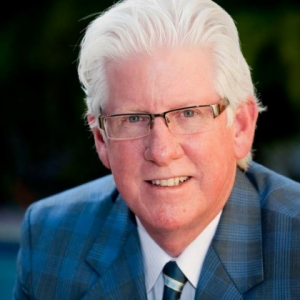
Bill Talbert

William D. Talbert, III, CDME has served as President & CEO of the Greater Miami Convention & Visitors Bureau (GMCVB) for the past eighteen years and Chief Operating Officer for the prior nine. His major accomplishments include assisting with the passage of the Travel Promotion Act of 2010; negotiating inter-local government funding agreements; preparing five successful Super Bowl bids, including the most recent bid for the NFL’s centennial year 2020 Super Bowl; and three Pow Wow bids. Under Talbert’s leadership, the GMCVB was awarded accreditation from the Destination Marketing Accreditation Program in November 2007.

In June 2016, Talbert was appointed to the United States Commerce Department’s 2016-2018 Travel & Tourism Advisory Board. The Board serves as the advisory body to the Secretary of Commerce on matters relating to the travel and tourism industry in the United States and offers recommendations on implementation of the National Travel and Tourism Strategy.

On July 1, 2016, Talbert became Chair of the VISIT FLORIDA Board of Directors for FY 2016-17. VISIT FLORIDA is the state’s official tourism marketing corporation and serves as Florida’s official source for travel planning to visitors across the globe.

Talbert holds a master’s degree in Public Administration from Florida Atlantic University and bachelor’s degree in Business Administration from the University of Florida. In 2006, he earned the Certified Destination Management Executive (CDME) designation – the highest educational achievement in the destination marketing industry.
 

Glen Lerner

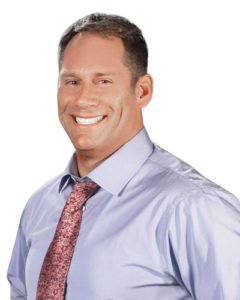
Personal Injury Attorney Glen Lerner is a founding partner of Lerner and Rowe Injury Attorneys and Lerner and Rowe Law Group. Attorney Glen Lerner is only licensed to practice personal injury law in the State of Nevada and has been doing so since 1991. He has successfully built not just a local name, but a national reputation. Glen Lerner deals with a large network of attorneys all over America to provide legal services in cases of personal injury, medical malpractice, hazardous products, and more.

The offices of Lerner and Rowe and their attorneys believe in respecting their customers. Glen prides himself in fighting for the “little guy” against big insurance companies and large corporations. “I grew up fighting every day of my life against bullies and I was the one who the other kids turned to. Now I do it as a grownup, and I get paid for doing what I love to do… fight!”

Lerner attended Dartmouth College for one year and graduated from Duke University in 1987 with a major in Religious Studies. Glen also prides himself on being a member of Duke’s 1986 NCAA Division I Men’s National Championship soccer team.

Glen Lerner is a 1990 graduate of Tulane Law School in New Orleans, Louisiana.
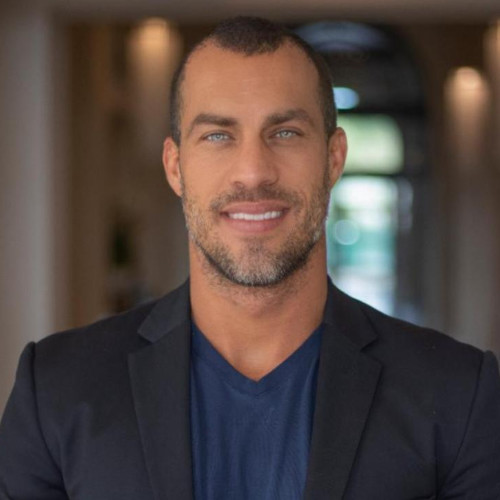
 

Michael Bertonatti is been in practice for ten years helping patients attain optimal health without using conventional medicine. Holistic being what it is, he utilize his background in the areas of nutrition, exercise,  Ayurvedic and Functional remedies. In Functional Medicine, we don’t just manage symptoms using natural products but apply the principles of “systems biology”. In other words , we focus on finding and correcting the underlying cause of imbalances within the system. If there is a problem, downstream we look upstream to find what he refers to as the lowest common denominator.


Working with patients, he will create an algorithm to demonstrate the underlying health issue and where it all commenced. He will then come up with a protocol based on lifestyle modification that includes a variety alternative for the patient. One man’s meat is another man’s poison. That also holds true for personal lifestyle choices and habits. In conclusion, Michael always preaches to patients “The food you eat can either be the safest and most powerful form of medicine or the slowest form of poison”.


Recently, Michael has also become a contributor at Self Improvement from SelfGrowth.com– SelfGrowth.com is the most complete guide to information about Self Improvement on the Internet.


Episode 569: 6-17-20

(To download, right-click and select “Save Link As”.)

Recent Posts

Follow Us

Watch Recent Episode

How you can build AI products without engineers

#AI #Inovation #Realestate #CRE #DeepBlocks

Jim Fried 35 views May 11, 2026 8:44 pm

Live Life to the Fullest
#flashbackfriday
tune in 4 the bottom line of my tribute to Jeff Berkowitz

Jim Fried 59 views May 8, 2026 2:50 pm

Great cities are shaped by people who see what others miss—and have the discipline to bring that vision to life. In this special episode of Fried On Business, Jim Fried pays tribute to Jeff Berkowitz, a Miami urban innovator whose leadership and insight helped influence the city’s growth and transformation.

Jim reflects on Jeff’s approach to development, leadership, and long-term thinking. Rather than focusing solely on transactions, Jeff understood the importance of place—how real estate, community, and infrastructure come together to create lasting value. His work was not just about buildings, but about shaping environments where people live, work, and connect.

Throughout the episode, Jim shares personal experiences and professional observations that highlight Jeff’s impact. He discusses the qualities that set Jeff apart: clarity of vision, consistency in execution, and a commitment to doing things the right way. These traits allowed him to navigate complex projects while maintaining trust with partners, stakeholders, and the broader community.

The conversation also emphasizes the broader lessons Jeff’s career provides. Leadership in urban development requires more than technical expertise—it demands patience, resilience, and the ability to think beyond immediate results. Jeff’s legacy demonstrates how thoughtful decision-making and long-term perspective can influence a city for generations.

Listeners will hear how one individual’s contributions can ripple outward, affecting not only projects, but people and communities. Jim reminds us that behind every skyline are individuals whose ideas and actions helped shape it.

This episode is both a reflection and a reminder: the true measure of success is not just what you build, but the impact you leave behind.

This episode of Fried on Business is brought to you by our presenting sponsor, Warren Henry Auto Group.

🎙️ New to streaming or looking to level up? Check out StreamYard and get $10 discount! 😍 https://streamyard.com/pal/d/6126418013716480

Great cities are shaped by people who see what others miss—and have the discipline to bring that vision to life. In this special episode of Fried On Business, Jim Fried pays tribute to Jeff Berkowitz, a Miami urban innovator whose leadership and insight helped influence the city’s growth and transformation.

Jim reflects on Jeff’s approach to development, leadership, and long-term thinking. Rather than focusing solely on transactions, Jeff understood the importance of place—how real estate, community, and infrastructure come together to create lasting value. His work was not just about buildings, but about shaping environments where people live, work, and connect.

Throughout the episode, Jim shares personal experiences and professional observations that highlight Jeff’s impact. He discusses the qualities that set Jeff apart: clarity of vision, consistency in execution, and a commitment to doing things the right way. These traits allowed him to navigate complex projects while maintaining trust with partners, stakeholders, and the broader community.

The conversation also emphasizes the broader lessons Jeff’s career provides. Leadership in urban development requires more than technical expertise—it demands patience, resilience, and the ability to think beyond immediate results. Jeff’s legacy demonstrates how thoughtful decision-making and long-term perspective can influence a city for generations.

Listeners will hear how one individual’s contributions can ripple outward, affecting not only projects, but people and communities. Jim reminds us that behind every skyline are individuals whose ideas and actions helped shape it.

This episode is both a reflection and a reminder: the true measure of success is not just what you build, but the impact you leave behind.

This episode of Fried on Business is brought to you by our presenting sponsor, Warren Henry Auto Group.

🎙️ New to streaming or looking to level up? Check out StreamYard and get $10 discount! 😍 https://streamyard.com/pal/d/6126418013716480

2 0

YouTube Video VVU4aS1uUXJ0T1VrQmVOeGNhODFzaHV3LmlPSzVyOHNpRXhn

Honoring Jeff Berkowitz: The Impact of an Urban Visionary

Jim Fried 29 views May 6, 2026 4:21 pm

Bottom line: family office is family and business
keys to working with a #familyoffice

Jim Fried 32 views May 1, 2026 3:02 pm

Family offices have become one of the most influential sources of capital in today’s investment landscape—but their decision-making process often remains misunderstood. In this episode of Fried On Business, Jim Fried breaks down the key issues that drive how family offices evaluate opportunities, structure investments, and ultimately decide where to deploy capital.

Jim explains that family offices think differently than institutional investors. While returns matter, they are rarely the only priority. Capital preservation, long-term stability, and alignment of interests often outweigh aggressive growth strategies. Family offices are typically investing generational wealth, which means their decisions are shaped by a broader perspective that includes legacy, reputation, and continuity.

Throughout the episode, Jim highlights the importance of trust. Relationships play a central role in family office investing. Sponsors who demonstrate transparency, consistency, and credibility over time are far more likely to earn capital than those who simply present strong numbers. Jim discusses how due diligence extends beyond financials to include character, communication style, and the ability to manage adversity.

The conversation also explores governance and control. Family offices often seek clarity on decision-making authority, downside protection, and how risks are shared among partners. Flexible structuring can be a key differentiator, but only when it aligns incentives rather than creating confusion or conflict.

Listeners will learn how to approach family offices more effectively by understanding their priorities. Jim emphasizes that successful capital raising in this space requires patience, preparation, and a relationship-first mindset. It is not about pitching deals—it is about building partnerships.

If you are raising capital, investing alongside family offices, or simply trying to understand how private wealth operates, this episode provides a clear framework for navigating one of the most important capital sources in today’s market.

This episode of Fried on Business is brought to you by our presenting sponsor, Warren Henry Auto Group.

🎙️ New to streaming or looking to level up? Check out StreamYard and get $10 discount! 😍 https://streamyard.com/pal/d/6126418013716480

Family offices have become one of the most influential sources of capital in today’s investment landscape—but their decision-making process often remains misunderstood. In this episode of Fried On Business, Jim Fried breaks down the key issues that drive how family offices evaluate opportunities, structure investments, and ultimately decide where to deploy capital.

Jim explains that family offices think differently than institutional investors. While returns matter, they are rarely the only priority. Capital preservation, long-term stability, and alignment of interests often outweigh aggressive growth strategies. Family offices are typically investing generational wealth, which means their decisions are shaped by a broader perspective that includes legacy, reputation, and continuity.

Throughout the episode, Jim highlights the importance of trust. Relationships play a central role in family office investing. Sponsors who demonstrate transparency, consistency, and credibility over time are far more likely to earn capital than those who simply present strong numbers. Jim discusses how due diligence extends beyond financials to include character, communication style, and the ability to manage adversity.

The conversation also explores governance and control. Family offices often seek clarity on decision-making authority, downside protection, and how risks are shared among partners. Flexible structuring can be a key differentiator, but only when it aligns incentives rather than creating confusion or conflict.

Listeners will learn how to approach family offices more effectively by understanding their priorities. Jim emphasizes that successful capital raising in this space requires patience, preparation, and a relationship-first mindset. It is not about pitching deals—it is about building partnerships.

If you are raising capital, investing alongside family offices, or simply trying to understand how private wealth operates, this episode provides a clear framework for navigating one of the most important capital sources in today’s market.

This episode of Fried on Business is brought to you by our presenting sponsor, Warren Henry Auto Group.

🎙️ New to streaming or looking to level up? Check out StreamYard and get $10 discount! 😍 https://streamyard.com/pal/d/6126418013716480

0 0

YouTube Video VVU4aS1uUXJ0T1VrQmVOeGNhODFzaHV3LnRxNEJNcF9yalVz

The Family Office Playbook: Capital, Control, and Trust

Jim Fried 23 views April 29, 2026 4:29 pm

Zoning has always been one of the most powerful—and most underutilized—tools in real estate investing. In this episode of Fried On Business, Jim Fried sits down with Olivia Ramos, founder of DeepBlocks, to explore how artificial intelligence is transforming the way investors understand and leverage zoning data.

Disclosure: Jim Fried owns stock in DeepBlocks

Olivia explains how DeepBlocks was built to solve a fundamental problem: zoning information is complex, fragmented, and often difficult to interpret at scale. Traditionally, investors relied on manual research, local expertise, and time-consuming analysis to uncover development potential. DeepBlocks changes that by using AI to process large amounts of zoning data quickly, identifying opportunities that might otherwise go unnoticed.

The conversation highlights how technology is shifting the competitive landscape. Investors who can analyze zoning faster and more accurately gain a significant advantage in sourcing deals, evaluating sites, and optimizing land use. Olivia shares how the platform helps users understand what can be built, where density can be increased, and how regulatory constraints impact value.

Jim and Olivia also discuss the broader implications of AI in commercial real estate. As tools like DeepBlocks become more sophisticated, they are not replacing human judgment—they are enhancing it. By providing better information, faster insights, and clearer scenarios, AI allows developers, investors, and planners to make more informed decisions.

Listeners will learn how zoning intelligence can uncover hidden value, reduce risk, and improve deal execution. Olivia also shares her perspective on where the industry is heading and how professionals can adapt to a more data-driven environment.

If you want to understand how technology is reshaping real estate from the ground up—literally—this episode offers a compelling look at the intersection of AI, zoning, and investment strategy.

This episode of Fried on Business is brought to you by our presenting sponsor, Warren Henry Auto Group.


🎙️ New to streaming or looking to level up? Check out StreamYard and get $10 discount! 😍 https://streamyard.com/pal/d/6126418013716480

Zoning has always been one of the most powerful—and most underutilized—tools in real estate investing. In this episode of Fried On Business, Jim Fried sits down with Olivia Ramos, founder of DeepBlocks, to explore how artificial intelligence is transforming the way investors understand and leverage zoning data.

Disclosure: Jim Fried owns stock in DeepBlocks

Olivia explains how DeepBlocks was built to solve a fundamental problem: zoning information is complex, fragmented, and often difficult to interpret at scale. Traditionally, investors relied on manual research, local expertise, and time-consuming analysis to uncover development potential. DeepBlocks changes that by using AI to process large amounts of zoning data quickly, identifying opportunities that might otherwise go unnoticed.

The conversation highlights how technology is shifting the competitive landscape. Investors who can analyze zoning faster and more accurately gain a significant advantage in sourcing deals, evaluating sites, and optimizing land use. Olivia shares how the platform helps users understand what can be built, where density can be increased, and how regulatory constraints impact value.

Jim and Olivia also discuss the broader implications of AI in commercial real estate. As tools like DeepBlocks become more sophisticated, they are not replacing human judgment—they are enhancing it. By providing better information, faster insights, and clearer scenarios, AI allows developers, investors, and planners to make more informed decisions.

Listeners will learn how zoning intelligence can uncover hidden value, reduce risk, and improve deal execution. Olivia also shares her perspective on where the industry is heading and how professionals can adapt to a more data-driven environment.

If you want to understand how technology is reshaping real estate from the ground up—literally—this episode offers a compelling look at the intersection of AI, zoning, and investment strategy.

This episode of Fried on Business is brought to you by our presenting sponsor, Warren Henry Auto Group.


🎙️ New to streaming or looking to level up? Check out StreamYard and get $10 discount! 😍 https://streamyard.com/pal/d/6126418013716480

0 0

YouTube Video VVU4aS1uUXJ0T1VrQmVOeGNhODFzaHV3Lk1LbzNUbjhlX2ZB

From Data to Deals: How AI Is Changing Real Estate Development

Jim Fried 9 views April 22, 2026 4:25 pm

Jim Fried - Why Florida's retail market is outperforming the U.S.

Jim Fried 91 views April 21, 2026 3:14 pm

For years, retail real estate was written off as the weakest sector in commercial real estate. E-commerce growth, changing consumer habits, and shifting tenant demand led many to believe that brick-and-mortar retail was in permanent decline. In this episode of Fried On Business, Jim Fried explains why that narrative has changed—and why retail has suddenly become one of the hottest sectors in today’s market.

Jim breaks down the key drivers behind retail’s resurgence. One of the most important factors is supply. Over the past decade, very little new retail space was developed, which has created a shortage in many markets. At the same time, demand has remained steady or even grown, particularly for well-located, experience-driven retail environments.

The episode also explores how retail has evolved. It is no longer just about selling products—it is about creating experiences. Restaurants, fitness centers, service providers, and entertainment concepts are now critical components of successful retail centers. These tenants bring consistent foot traffic and are less vulnerable to online competition.

Jim discusses how the shift in tenant mix has strengthened the sector. Landlords are more selective, focusing on quality tenants that complement one another and create a destination. This curated approach leads to stronger occupancy, better rent growth, and more resilient assets.

Listeners will also learn why capital is flowing back into retail. Compared to other sectors facing uncertainty, retail offers relative stability when properly managed. Jim explains how investors are reevaluating the space and why disciplined underwriting remains essential.

If you’ve been ignoring retail based on outdated assumptions, this episode offers a fresh perspective on why the sector is thriving—and how strategic thinking is driving its success.

This episode of Fried on Business is brought to you by our presenting sponsor, Warren Henry Auto Group.

🎙️ New to streaming or looking to level up? Check out StreamYard and get $10 discount! 😍 https://streamyard.com/pal/d/6126418013716480

For years, retail real estate was written off as the weakest sector in commercial real estate. E-commerce growth, changing consumer habits, and shifting tenant demand led many to believe that brick-and-mortar retail was in permanent decline. In this episode of Fried On Business, Jim Fried explains why that narrative has changed—and why retail has suddenly become one of the hottest sectors in today’s market.

Jim breaks down the key drivers behind retail’s resurgence. One of the most important factors is supply. Over the past decade, very little new retail space was developed, which has created a shortage in many markets. At the same time, demand has remained steady or even grown, particularly for well-located, experience-driven retail environments.

The episode also explores how retail has evolved. It is no longer just about selling products—it is about creating experiences. Restaurants, fitness centers, service providers, and entertainment concepts are now critical components of successful retail centers. These tenants bring consistent foot traffic and are less vulnerable to online competition.

Jim discusses how the shift in tenant mix has strengthened the sector. Landlords are more selective, focusing on quality tenants that complement one another and create a destination. This curated approach leads to stronger occupancy, better rent growth, and more resilient assets.

Listeners will also learn why capital is flowing back into retail. Compared to other sectors facing uncertainty, retail offers relative stability when properly managed. Jim explains how investors are reevaluating the space and why disciplined underwriting remains essential.

If you’ve been ignoring retail based on outdated assumptions, this episode offers a fresh perspective on why the sector is thriving—and how strategic thinking is driving its success.

This episode of Fried on Business is brought to you by our presenting sponsor, Warren Henry Auto Group.

🎙️ New to streaming or looking to level up? Check out StreamYard and get $10 discount! 😍 https://streamyard.com/pal/d/6126418013716480

0 0

YouTube Video VVU4aS1uUXJ0T1VrQmVOeGNhODFzaHV3LjRSSHM1bXlUdjln

From Dead to Dominant: The Surprising Rise of Retail Real Estate

Jim Fried 12 views April 15, 2026 4:42 pm

Jim Fried - Smart Investors' Playbook: Retail 'Unicorns'
What are mart investors focusing on today?

Jim Fried 127 views April 13, 2026 7:47 pm